Finger Tattoos
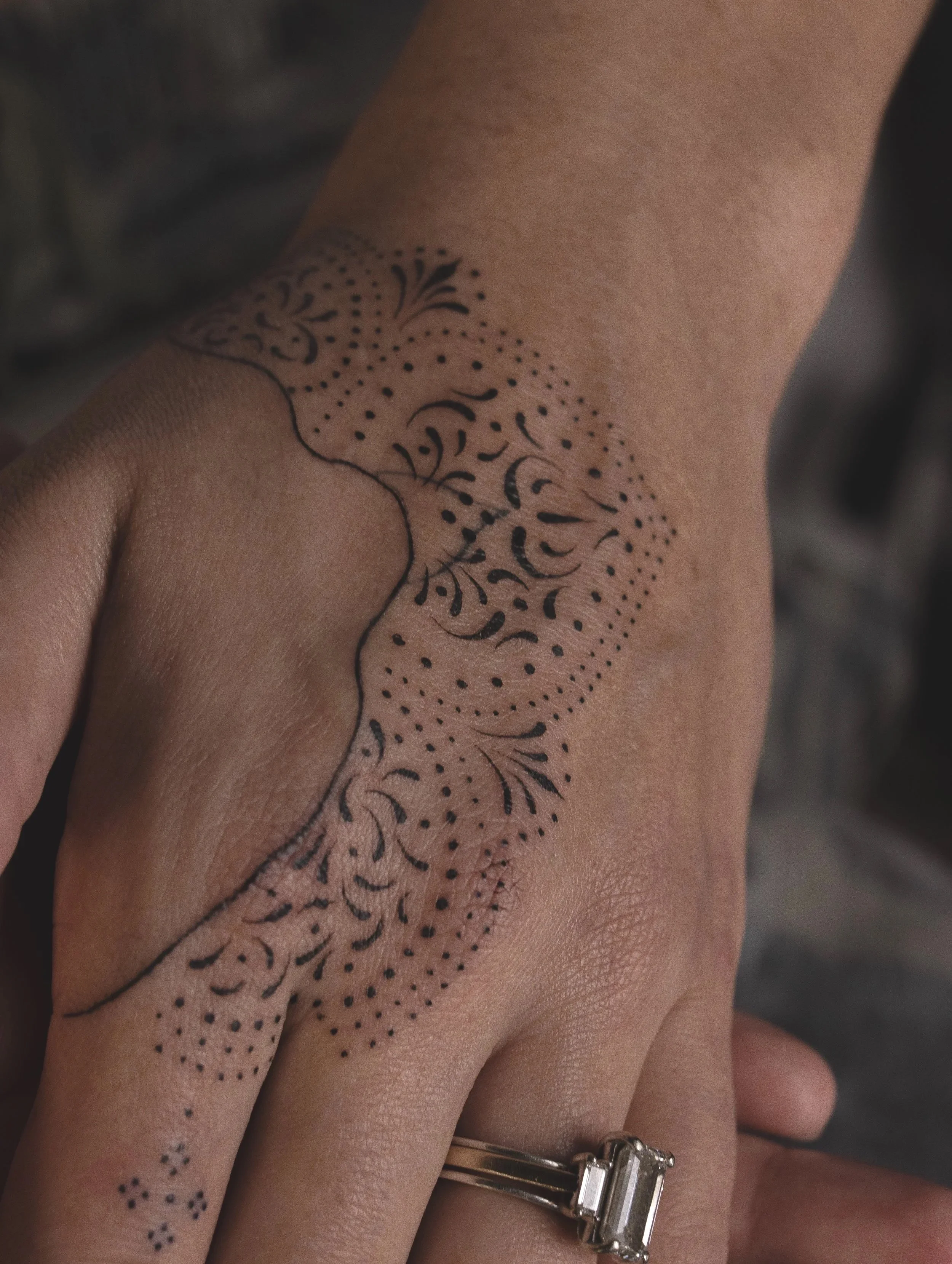
Why do hand or finger tattoos fade quickly? And, why are a lot of artists hesitate to tattoo small or fine-line designs on this specific area?
There are a few reasons why the skin on our hands and fingers are a bit different than the rest of out bodies:
Fast Cell Regeneration: The skin on our hands is in constant use, moving, touching everything and getting washed consistently throughout the day. That means we are constantly shedding and regenerating the skin cells in that area. In turn, those same cells hold the pigment of your tattoo and can appear to fade faster as a result.
Skin on our hands is thinner. The skin on, in-between our hands and fingers is much more textured than other parts. This can affect how ink settles and heals.
Many artists, including myself, love the look of fine-line and dainty finger or hand tattoos. But, here are some of the reasons such designs are cautioned against and considered “risky” to take on.
Surface Area: Limited space on fingers, in-between fingers, and even some hands, can make it very difficult to control a thin, sharp needle in order to execute a clean design. Intricate designs can be challenging as they can blur, “simple” designs can be difficult because the placement is difficult to stabilise.
How Tattoos Heal and Ink Spreads: All ink spreads to a degree. It is the nature of healing and your skin aging. “Spreading” is caused by your body’s white blood cells attempting to “carry away” the foreign pigment molecules. In such a small area, that spreading effect can appear much more dramatic, distorting small designs.
Longevity and the Trade-off of “Fine-Line”: In order to execute fine, thin lines, smaller needle configurations are required. With a thinner, more precise needle, penetrating the skin’s layers is much easier, with minimal skin resistance, requiring a lighter hand pressure to inject ink. However, in doing so, an artist must be careful not to inject ink too deeply into the skin, or “blow-out”, giving the appearance of a bled out sharpie. Because skin on the hands and fingers is thinner, working superficially and then “building up” the pigment in the design can be the better approach. But, does not guarantee the necessary saturation for the tattoo to last. Which is a part of why artists tell clients that finger and hand tattoos do not age well.
Touch-Ups: Hand and finger tattoos are prone to frequent touch-ups to keep that “crisp” look. Not every client wants to commit to the maintenance of up keeping finger/hand tattoos.
When deciding on finger tattoo designs, consider a simple design with bold or truly black elements. Often the contrast of solid black with negative space or an outline in a design can give you the delicate look you’re wanting to achieve. Follow aftercare instructions and be prepared for at least one touch-up.
After Care
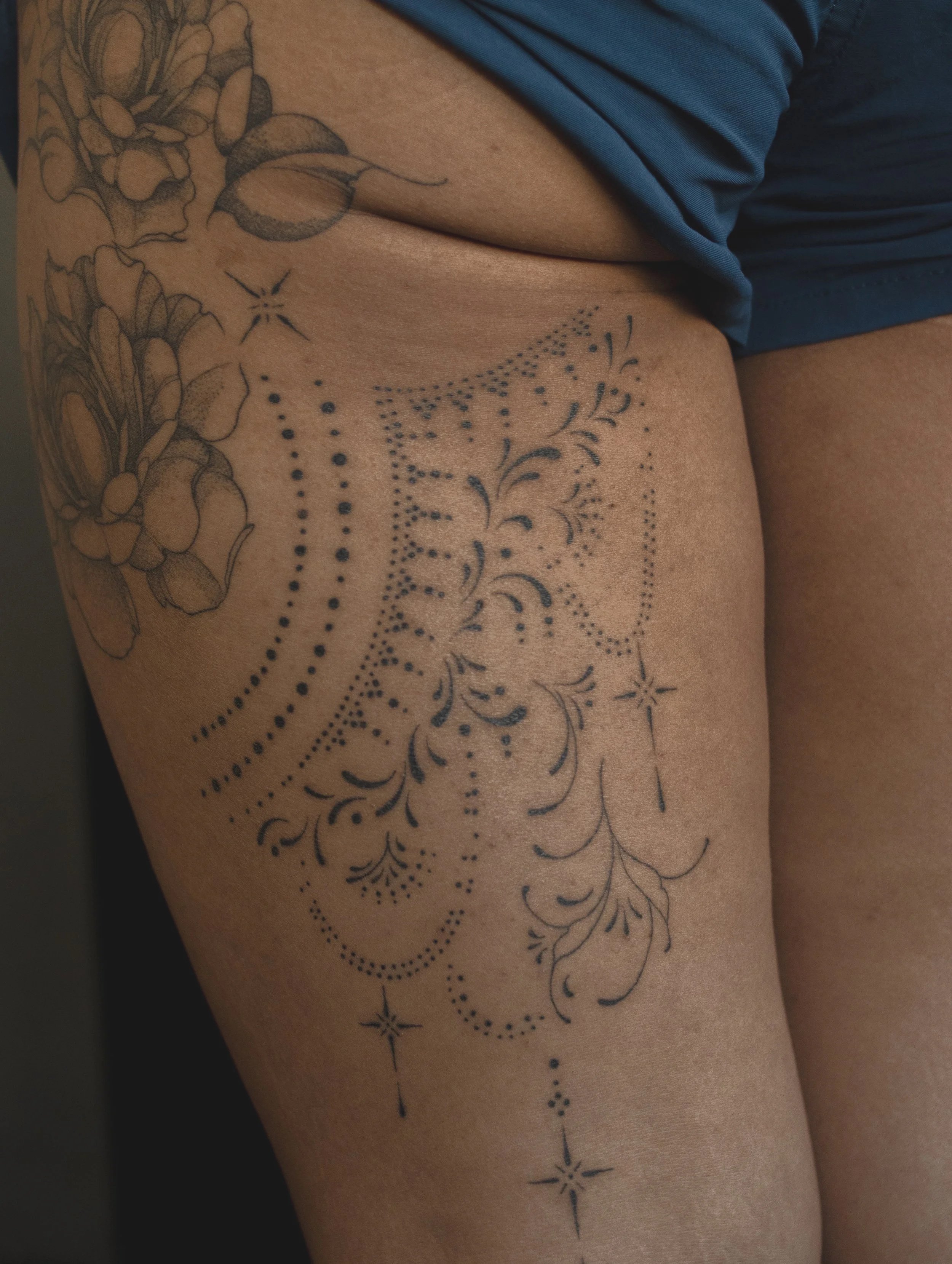
Unless you have opted out of the second skin bandage option for healing, your new tattoo will go home with you wrapped in Recovery Aftercare’s Derm Shield bandage. Derm Shield is a latex-free bandage that will remain on your tattoo for 24-72 hrs depending on what your artist tells you is best for your specific tattoo. You may need a new bandage after removing the first one. It’s normal to notice blood, plasma and ink “ooze” under the bandage within the first couple hours of your session.
Derm Shield is water resistant, you may shower with the bandage on. You may not take a bath, sauna, or otherwise submerge the bandage or tattoo in any water for 2 weeks.
Avoid excessive exercise like hot yoga, excess moisture can pull ink out of a tattoo and excessive sweat can irritate healing skin.
After removing your bandage, refrain from touching your new tattoo.
Wash your hands before touching your new tattoo.
Only wash your tattoo with a Fragrance Free and Unscented soap and clean hands.
Only moisturize your tattoo with a thin layer of Fragrance Free and Unscented lotion.
I do not recommend products like Aquaphor or Vaseline.
I do recommend lotions like Lubriderm.
Clean and Dry is best for a new tattoo.
Do Not apply sunscreen to your new tattoo nor expose it to direct sunlight. Instead, wear clothing that will cover your new tattoo.
Do Not pick at your new tattoo. If scabs or peeling form on or around the tattoo, allow them to naturally fall off.
Your tattoo will be sensitive while healing and peeling is normal within the first couple weeks. Mild swelling and redness are also normal and should disappear within a couple days. A tattoo is considered fully healed 2-4 weeks after the initial session.
Signs of Infection:
Persistent ooze-ing that is greenish or yellow in colour
Foul odor
Increased redness and swelling that is spreading
Increased pain
Fever
It is important to follow the specific aftercare instructions provided to ensure the best possible healing and results. If you have any questions or concerns about the aftercare process, be sure to ask your tattoo artist.
IF YOU ARE CONCERNED YOUR TATTOO IS INFECTED, SEEK MEDICAL ASSISTANCE IMMEDIATELY AND NOTIFY YOUR ARTIST LATER.